 zappi
zappi eddi
eddi eddi+
eddi+ libbi
libbi harvi
harvi Extras
 EV Charging
 Manage Your Energy
 Maximize Your Energy
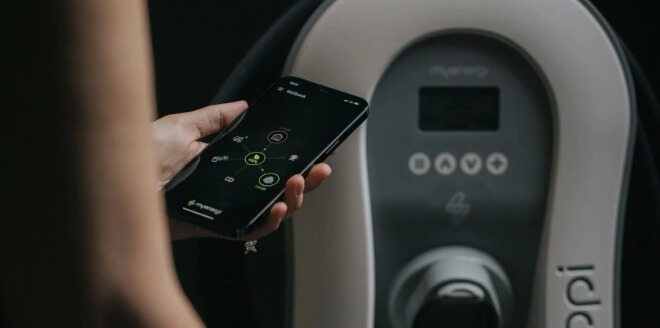 Track Your Energy Usage
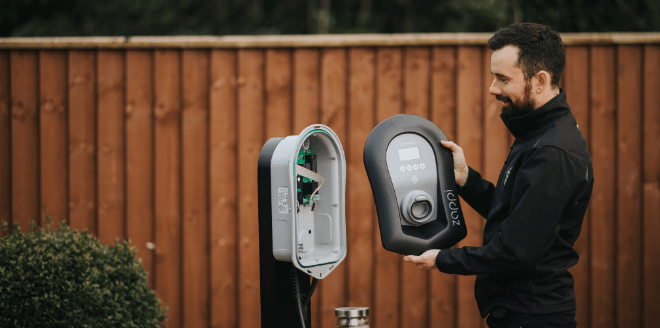 Find an installer
 Commercial Charging Station
 Connect Zappi to a management platform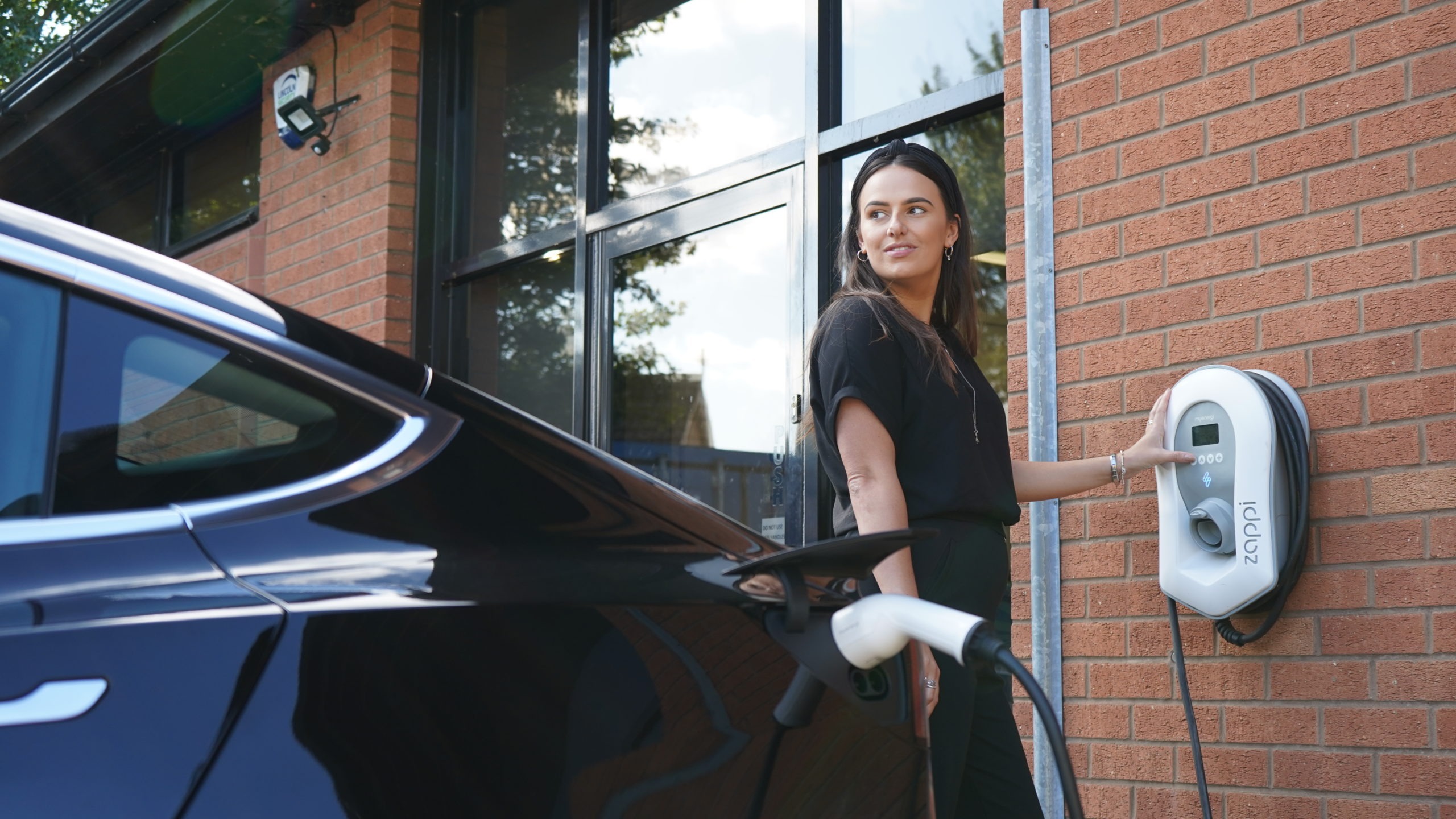

Read more
We’ve previously told you about various charging options. If you have your own garage or driveway at home, you can have a charging station or wall charger installed. But what does choosing a charging station involve? We’re happy to explain it in this guide.
A home charging station is often much cheaper than charging at a commercial station. Plus, with zappi, you can easily use the energy from your own solar panels to charge as affordably as possible.
1. Choosing a charging station starts in your utility closet
When choosing a charging station, it’s important to check what type of electrical connection you currently have in your meter box. Many older homes still have a single-phase connection, while newer homes have a three-phase connection. How fast you can charge at home depends on this electrical connection. With a single-phase connection, you can charge more slowly than with a three-phase connection. Of course, your car must be compatible with three-phase connections.
Not sure which type of connection you currently have? Does the electricity meter in your utility closet show 220 V or 230 V? Then you have a single-phase connection. Does it show 3x 220/230 V or 280/400 V? Then you have a three-phase connection. You may be able to have your single-phase connection upgraded by your utility provider. It will cost between approximately €250 and €300. Please note that after upgrading the connection, you’ll also pay higher recurring costs. In some cases, it’s also a good idea to install a power distributor in your utility panel. Do you cook with an induction cooktop or use a heat pump? Just like your electric car, these appliances also consume electricity.
By the way, it’s not a good idea to charge your electric car using a standard outlet. The charging cable can overheat and cause a fire.
2. Choose a charging station type
You can choose from different types of charging stations. Would you prefer to charge using a charging station or a wall-mounted charger? The advantage of a wall-mounted charger is that they’re often less expensive, since you don’t pay for the base and the pole.
In the video below, we explain what to look for when choosing a charging station:
3. Buy a charging station
Another important factor to consider when choosing your charging station is the capacity of your electric car. If your car can be charged quickly but you can only charge it slowly, then its capacity isn’t being fully utilized. Conversely, it can take a long time to charge your car if it can’t handle fast charging but your charging station can.
Choosing a charging station isn’t just for now—it’s also for the future. That’s why it’s wise to consider any future cars you might own. It’s best to opt for a slightly higher charging capacity than your current car requires. That way, you’ll be able to charge any new car efficiently and quickly.
4. How much does a charging station cost?
Our smart EV charger, zappi, is available starting at €849. It’s the only EV charger with built-in PEN fault technology, making it the safest choice when it comes to electric charging. This eliminates the need for grounding rods, so there are no extra costs and installation is easy.
5. Bonus: Charging with Solar Panels
Do you have solar panels Do you have solar panels on your roof? If so, having your own charging station could be even more appealing. You can use the energy from your solar panels to zappi namely, you can easily use it to charge your car's battery. That will save you a significant amount of money.
Don’t have solar panels (yet)? Even so, you can still charge affordably with zappi. The system can be configured so that your battery charges only during off-peak hours, allowing you to charge at the lowest rate. If you decide to install solar panels later, zappi can easily be adjusted to work with them.