
 zappi
zappi eddi
eddi eddi+
eddi+ libbi
libbi harvi
harvi Extras
 EV Charging
 Manage Your Energy
 Maximize Your Energy
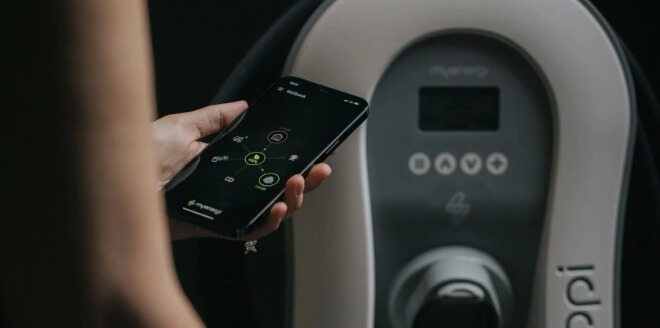 Track Your Energy Usage
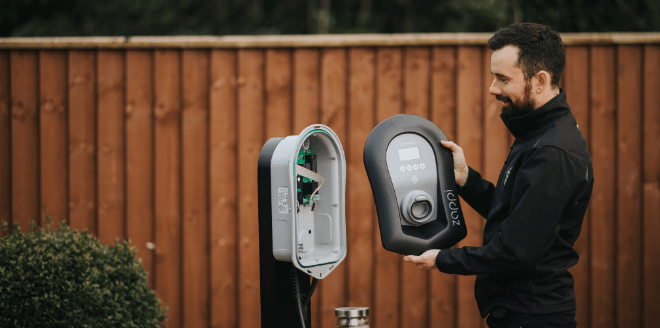 Find an installer
 Commercial Charging Station
 Connect Zappi to a management platform

Read more
There are many different opinions about electric cars. Is driving one really an environmentally friendly option? Are they really that quiet? To provide some clarity, we’ll discuss the pros and cons of electric driving below.
Advantage: It is an environmentally friendly way to drive
A major advantage of driving an electric car is that it’s much cleaner than driving a traditional car. After all, you don’t emit any pollutants. If you charge your electric car with green electricity from your provider or with electricity you generate yourself from solar panels, it’s even better for the environment.
Drawback: Production and recycling do have an impact
When discussing the pros and cons of electric driving, the production of electric cars is a point that often comes up. Manufacturing an electric car consumes energy. Recycling them isn’t that easy either and has an impact on the environment. However, when you look at the entire lifespan of an electric car And when you compare it to a gasoline-powered car, the electric car ultimately has a lower environmental impact. Electricity generation can also become more environmentally friendly by producing cleaner energy with wind turbines and solar panels. At myenergi, you can easily charge your electric car with clean energy from your own solar panels using zappi.
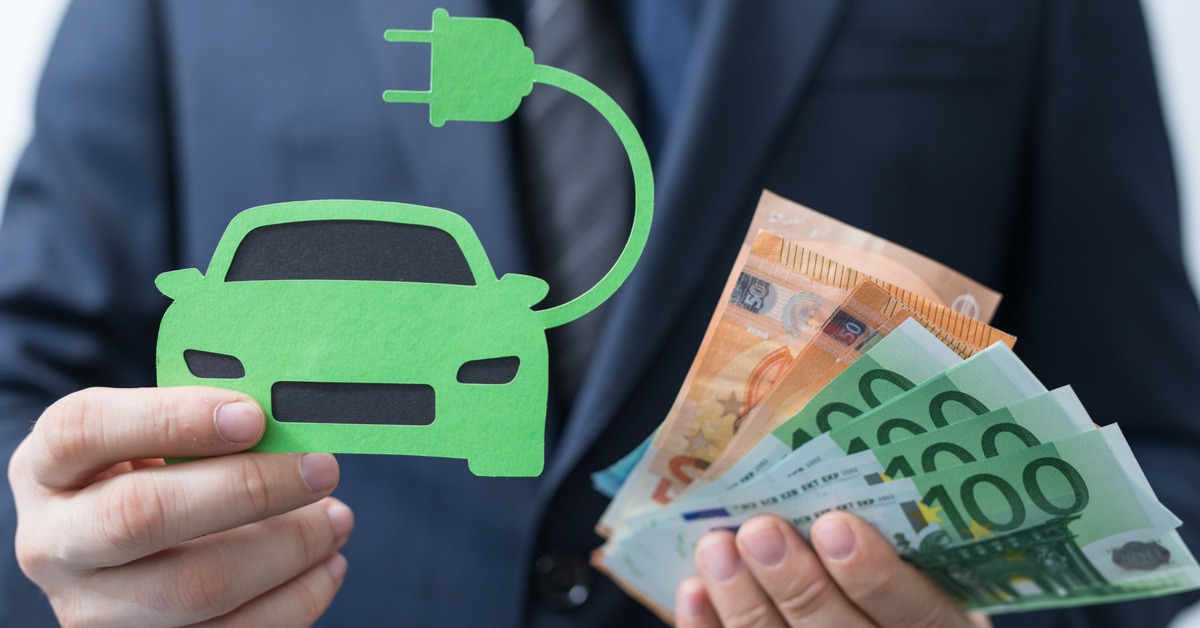
Advantage: Driving on electricity is cheaper than driving on gasoline
Especially with rising gas prices, driving an electric vehicle offers a major advantage. That’s because it’s cheaper to drive on electricity than on fuel. While energy prices are also rising sharply right now, on balance, driving an electric vehicle is still cheaper than filling up with gas, diesel, or LPG. You can save up to half the cost if you charge your car at home. If you charge your car at a public charging station, it’s often more expensive than charging at home, but even then, it’s still cheaper than regular fuel.
Disadvantage: Charging takes time
When weighing the pros and cons of electric driving, charging time is a dilemma for many. It does indeed take longer to charge an electric vehicle than to fill up at a gas station. While you can fill a gas tank completely in just a few minutes, an electric car’s battery takes more time. Charging time depends on the size of your battery in kW and the charging rate in kWh. On average, you can expect it to take nearly 8 hours with a home charger. At a public charging station, it takes about 1 to 2 hours, and at a fast-charging station, half an hour. It does require some planning if you want to drive longer distances.
However, it doesn't have to be a major drawback. With zappi can Set a time when your car should be charged. Our smart energy monitors You can also determine when electricity is cheapest and charge your car at that time. After that, your car won’t need to be charged again until the driving range is no longer sufficient. By then, you’ll have already been driving on electric power for several hours, and you’ll probably be ready for a break yourself. You can then conveniently combine that with charging.

Disadvantage: The cost of purchasing an electric car is higher
If there’s one thing people see as a major drawback to electric driving, it’s the purchase price. It’s true that, at the moment, electric cars are still more expensive than gas-powered cars. However, more and more people are choosing to drive electric vehicles, which is increasing demand and will lead to a greater supply. As a result, the number of used electric cars will also rise. This will make buying an electric car more affordable.
Advantage: Requires less maintenance
The purchase price may be a larger expense, but maintenance is not. That’s a major advantage of electric driving. An electric motor has fewer moving parts than an internal combustion engine. As a result, an electric car is less prone to wear and tear.
In addition, the government encourages electric driving through a subsidy. It also offers tax benefits for you. The additional tax liability for electric lease cars is significantly lower than that for gasoline and diesel cars. Currently, in the Netherlands, you also do not have to pay road tax or purchase tax (BPM). That makes a big difference in costs.
Disadvantage: I can't travel as far when driving an electric car
So there are pros and cons to driving an electric car. Whether an electric car is right for you depends on several factors. One of the most important questions you should ask yourself is: Is the range sufficient for my daily activities? The downside of driving an electric car is that you can’t travel as far on a full battery as you can on a full tank of gas. On average, you can drive between 100 and 500 kilometers on a full battery. With a gasoline-powered car, a full 50-liter tank will take you 750 kilometers. This is based on an average fuel economy of 15 kilometers per liter.
In the engineering field, they are actively working on developing batteries that can offer a longer range. So, it is expected that you will be able to drive farther and farther on electric power in the future.

Advantage and disadvantage: Electric cars are quiet
To wrap up our list of the pros and cons of electric driving, we’d like to point out that electric cars are much quieter. The electric motor makes far less noise than an internal combustion engine. This is an advantage because it reduces noise pollution. Especially if you live near a highway, it’s much more pleasant when more people drive electric vehicles. However, it’s also a disadvantage. You’re less likely to hear other traffic approaching. As a result, a cyclist or pedestrian might not notice you. Causing a collision is, of course, the last thing you want. That’s why some electric cars are designed to make more noise at lower speeds.
Pros and cons of electric driving—what does myenergi think about this?
The decision on whether or not to choose an electric car, after weighing the pros and cons of electric driving, is, of course, up to you. At myenergi, we’d love to see more electric cars on the road. Technology is advancing at a rapid pace, and electric cars are becoming increasingly efficient and safer to drive. Charging your car using your own solar panels makes it a clean and affordable way to drive. We therefore see it as a great step toward a more sustainable future.