 zappi glo
 zappi multiphase
 eddi
eddi eddi+
eddi+ libbi
libbi app
app Accessories
 Merch
MerchWhat is an energy diverter?
What is a solar energy diverter?
What exactly is an energy diverter, and how can it help you make better use of your solar power? If you’ve installed solar panels or are considering it, understanding how to use excess energy is key to maximising savings. In this guide, we’ll explain how energy diverters work, what they do, and why they’re becoming an essential part of modern home energy systems.
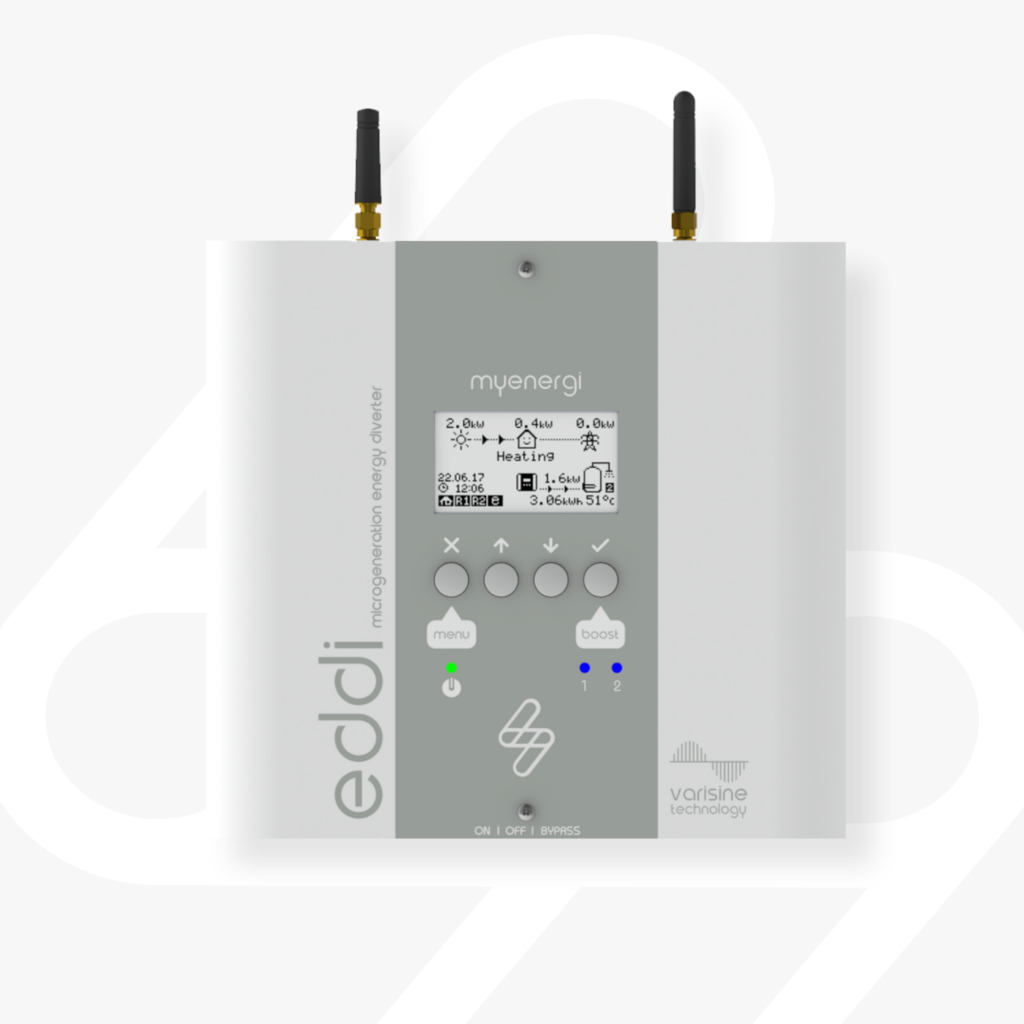
What does an energy diverter do?
The primary function of an energy diverter is to prioritise the consumption of solar energy within the property, thereby reducing dependency on grid electricity and maximising the financial benefits of solar power generation. It achieves this by diverting surplus solar energy that is not immediately consumed by the connected loads, such as household appliances or lighting, to auxiliary devices or systems that can utilise the excess energy effectively. Typically, any excess energy generated on a solar (PV) system is sent back to the grid at a lower price, or is often wasted. Put simply, an energy diverter stops this wastage so you can use the power in your home.
Uses of an energy diverter
One common application of solar diverters is water heating. They can be integrated with electric water heaters or immersion heaters to divert surplus solar energy directly into the water heating system. By doing so, the diverter optimises the use of solar power to heat water, reducing the reliance on conventional electric heating methods and saving on energy costs.
How does an energy diverter work?
Energy diverters typically consist of a control unit and a power relay. The control unit continuously monitors the amount of solar energy being generated by the PV system and compares it with the instantaneous power consumption within the property. When excess energy is detected, the control unit signals the power relay to divert the surplus energy to the predetermined destination, such as the water heater or other designated loads.
By employing a solar energy diverter, homeowners or businesses can make the most of their solar power systems, ensuring that a higher proportion of the generated energy is utilised on-site rather than being exported to the grid. This increases self-consumption, reduces electricity bills, and enhances the overall efficiency of the solar power installation.
It’s important to note that specific features and functionalities of solar diverters may vary among different manufacturers and models. Therefore, it’s recommended to consult the product documentation or seek professional advice to understand the capabilities and compatibility of a particular solar diverter with your solar power system.